


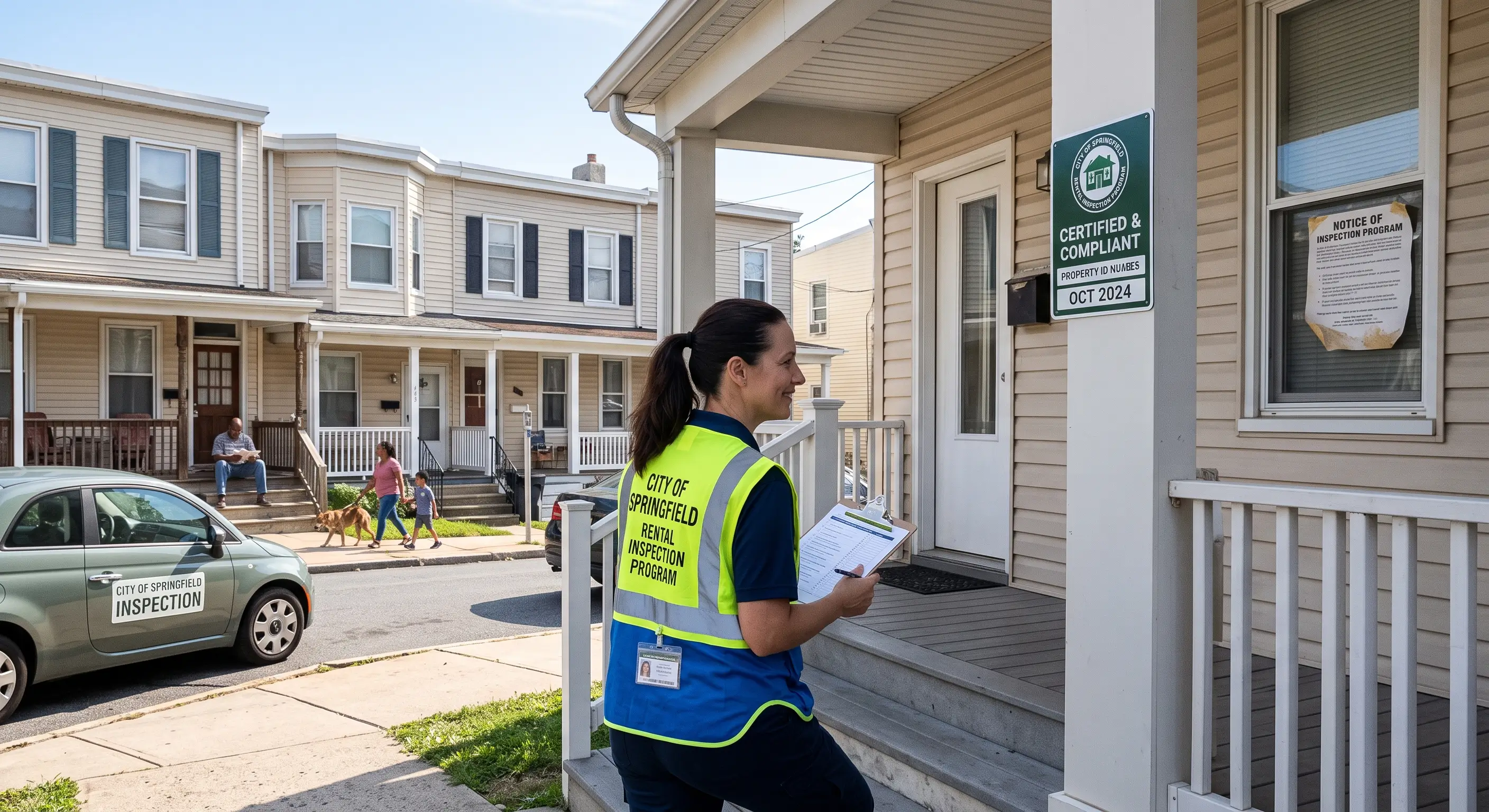
A year ago, Richmond City Council voted 9-0 to create the city's first residential rental inspection program. After more than two years of debate, that felt like a major turning point.
Since then, the headlines have quieted down, and many landlords are left wondering what actually changed. The honest answer is more nuanced than either side of the original debate expected.
We track this ordinance closely for our Richmond and Henrico owners, so here is where things actually stand a year in, and what you genuinely need to worry about.
This matters because roughly 57 percent of Richmond residents rent, so any real enforcement tool in the rental market has ripple effects well beyond the properties it directly targets.
Key Takeaways
- Richmond's rental inspection ordinance passed in November 2025, but it only creates a framework, not immediate citywide inspections.
- The program only applies to properties with more than three dwelling units, exempting the vast majority of individual landlords.
- Multi-property inspection districts can only include properties under the same ownership or management, similar to Henrico's existing approach.
- A full year later, no specific inspection districts have been widely publicized as finalized, since the district-mapping process takes real time.
- Owners of smaller rentals are not exempt from this conversation, since code enforcement and habitability standards apply regardless.
What the Ordinance Actually Created
The ordinance the Council passed in November 2025 established a legal framework for a Residential Rental Inspection Program, but it did not switch on inspections citywide. Virginia law does not allow that. Cities can inspect only within specifically designated districts, and Richmond still had to determine how those districts would be identified.
Once a district is formally established, the city can begin inspecting units within it after a 90 day waiting period. Periodic inspections can then happen once a year, and units with no violations become exempt from further inspection for four years.
The Three-Unit Threshold Most Owners Miss
Here is the detail that gets lost in most conversations about this ordinance: it only applies to properties with more than three dwelling units. If you own a single-family rental, a duplex, or a triplex, this program does not apply to your property.
That threshold means the ordinance targets larger apartment complexes and multi-unit portfolios, not individual landlords renting out one or two homes. If your portfolio consists of smaller properties, this particular law is not the one to lose sleep over.
How Inspection Districts Actually Get Created
A district can't be declared simply because a councilmember or advocacy group wants one. The city must determine that an area contains rental units that are blighted or deteriorating and that inspections are genuinely necessary to maintain safe and sanitary living conditions.
Multi-property districts can also only combine properties under the same ownership or management. Richmond planning staff pointed specifically to Henrico County's existing program as a model, which has focused on individual developments with high volumes of resident complaints rather than declaring entire neighborhoods, unlike Fairfax City, which has taken a broader neighborhood-based approach.
District boundaries, once approved, are expected to remain in effect for up to a decade before they need reevaluation. That long runway is part of why city officials have moved cautiously. Getting a district boundary wrong creates a decade-long headache, not a quick fix.
Where Things Actually Stand One Year Later
As of this writing, we have not seen public confirmation that specific inspection districts have been finalized and activated. The mayor's administration indicated last year that building out the district-identification process would take roughly six months, which puts serious district proposals landing sometime in mid to late 2026.
If you own a larger multi-unit property in Richmond, particularly one with a documented history of resident complaints, it is worth checking directly with the city's planning department for the current status of any proposed districts in your area, rather than assuming the program remains purely theoretical.
What This Means for Richmond Landlords Right Now
Even if this specific ordinance doesn't reach your property directly, the underlying pressure behind it isn't going away. Richmond's habitability standards under the Virginia Uniform Statewide Building Code apply regardless of unit count, and code enforcement complaints can still trigger an inspection at any property. Our maintenance team treats proactive upkeep as the real defense here, since a well-maintained property rarely draws the kind of complaint history that leads to a formal inspection district in the first place.
It is also worth watching how this program evolves, even if you fall below the four-unit threshold today. Ordinances like this one sometimes expand their scope in later amendments once the initial framework proves workable, and staying informed early costs far less than reacting after a change is already in effect.
Frequently Asked Questions
Does the rental inspection ordinance apply to my single-family rental?
No. The program applies only to properties with more than three dwelling units, which exempts single-family homes, duplexes, and triplexes from this ordinance.
Has Richmond actually designated any inspection districts yet?
As of this writing, no specific districts have been widely publicized as finalized. The city indicated that identifying districts would take time after the ordinance passed, and that process still appears to be underway.
Will I be charged a fee if my property gets inspected?
Property owners are not charged simply for being inspected, though violations found during an inspection could lead to penalties and required corrections.
How long does a rental inspection district last once created?
District designations are expected to expire after roughly a decade, and individual units with no violations become exempt from further inspection for four years.
Should smaller landlords ignore this ordinance entirely?
The specific program does not apply below the four-unit threshold, but general code enforcement and habitability obligations still apply to every rental in the city, regardless of size.
Stay Ahead of Richmond's Compliance Landscape
Richmond's rental inspection program is still taking shape a year after it passed, and the details matter more than the headline. Knowing exactly who it applies to, and who it does not, keeps you from worrying about the wrong thing.
It also keeps you from making the opposite mistake: assuming a program that only applies to larger complexes today will never touch your smaller property down the road.
At Relevate Property Guides, we track ordinances like this closely so our Richmond and Henrico owners always know where they actually stand. If you want your property reviewed against current code enforcement standards, request a free rental analysis, or explore our owner resources to see how we help owners stay ahead of city compliance changes.